In late 1962, at the height of the Cuban Missile Crisis, an elementary school in rural California received warning of an imminent nuclear attack. As the yellow light flashed on their control panel, the administration tried to establish whether this was a fault or a test. Unable to get confirmation, they had to go through with procedure: the children were assembled in the playground and then escorted home on foot by the designated teachers.
Frank and Eleanor Perry’s 1963 film ‘Ladybug Ladybug’ uses this incident to examine what happens when kids are forced to confront the idea of death, not only their own, but that of their friends and families, their entire world. It’s a challenging concept even when you come face to face with the reality, but when the threat is abstract, when nothing or no one had died and there is no visible sign of danger, it’s something hard to get your head around. The adults know what might be coming, but even they are unsure, unwilling to believe, bewildered.
After the alarm sequence, the film consists of one simple action, the journey home. The kids are led along quiet country lanes, cross sunlit fields. It would be idyllic if not for the growing awareness of crisis. Panic on a long fuse. Then they arrive one by one at empty houses or encounter disbelieving and inconvenienced parents and they have to take matters into their own hands. It could be a bad dream. And the ending has the temperature of a child about to wake from a feverish nightmare.
‘Little Fugitive’ is a vérité style independent feature feature film shot in New York and Coney Island in the early fifties. I wasn’t aware of it until recently, but I probably should have been. It won the Silver Lion at the Venice Film Festival and was a key influence on the French New Wave and surely too on the Dardenne brothers. “Our New Wave would never have come into being if it hadn’t been for the young Morris Engel…with his fine ‘Little Fugitive.’” <Francois Truffaut>
The premise caught my attention: a seven year-old boy is tricked into believing he has killed his elder brother and flees to Coney Island with the money his mother left for groceries. This could be the back story for one of my ‘tales of wonder and despair,’ I thought. And, in fact, I have a note somewhere about the boy as a fugitive from a crime he didn’t commit. It’s a situation that provokes an intriguing mix of adventure and guilt, while also offering a clear resolution.
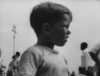
But the set-up proves the least effective part of the film. It feels staged, the child actors self-conscious, performing to camera. I was bracing myself for disappointment, but once we reach Coney Island, the film burst into life, spontaneous and incidental. We watch the boy roam the amusement park and beach in a series of short scenes and passing encounters captured by a concealed camera strapped to the the director/cameraman’s body.
Although the story does not seem to progress through this action, this is where the film is most compelling because, released from parental oversight, the boy starts to express himself. Inadvertently. Innocently. By doing whatever he feels like. We already know he dreams of being a cowboy. He carries a toy gun in a holster and longs to ride horses on the range. When he arrives at the amusement park he makes straight for the carousel. He treats his mount like a real horse, stroking its mane, tapping its rump with the end of the rein. We see him go round and round, each time reaching out to catch a ring—a feature I’d never heard of, and which seems derived from the rodeo, requiring riders to lean from the horse and grab a small ring from a staging post.
The boy fails this challenge, but seeks to prove himself elsewhere, aspiring to the baseball skills of his elder brother and friends. He visits the tin can alley, repeatedly, and later struggles manfully to lift the bat against an automated pitching machine. He eats, randomly and with relish, hot dogs and watermelon and coke and ice-cream, though he rolls his candy floss into a ball to practice his aim. In between, he is left to wander among the crowd, bored and lonely.
It is only when he has exhausted his cash that he discovers the attraction he most covets: a pony ride. Fortunately, among the crowds on the beach, he meets a boy collecting bottle returns and he soon dedicates himself to raising funds for ride after ride after ride, so many rides the owner begins to wonder about the boy’s parents. When he raises the subject, the boy runs away.
The narrative picks up again, a gentle tale of a boy obtaining the solicitude of his elder brother, but these revelatory scenes of a boy following his inclinations remain the heart of the film. Innocent, direct, unencumbered by attitude.
And the vérité footage of 1950s Coney Island is sensational.
‘The Astrologer who Fell into a Well’ is a mean-spirited anecdote that demonstrates a common sense truth: you need to look where you are going, otherwise you may trip and fall. It goes like this:
An astrologer went walking at night to study the stars. He fell down a deep well. A passer-by answered his calls for help and, learning what had happened, told him he would do better looking at the ground before him than the sky above his head.
Apparently the anecdote’s protagonist was pre-Socratic philosopher Thales. It was widely-circulated in Ancient Greece and first cited by Plato. Later, during the Enlightenment period, the Thales character became an astrologer and the fable was used as a cheap shot to mock the pseudo-scientific occupation.
Gags, Gotchas, and Generosity
I have to confess the slapstick comedy amuses me. It’s a classic gag, straight out of the silent era. Keaton/Lloyd/Chaplin have all done versions of it. It works best in long-shot where the viewer sees the danger and also that the distracted character does not—the comedian has some fun with this anticipation.
Aesop’s fable reduces the gag to a simple gotcha, a told-you-so with the observer character pushing their way between the reader and action. In some versions, the observer doesn’t even bother to help and I end up having (even) more sympathy for astrologer—at least they have a passion. If I were staging the incident, I’d be tempted to have the observer also fall down a hole, distracted by a barely-warranted sense of superiority.
Like most fables, the characters are not fleshed out, the drama not fully inhabited. It seems plausible that the rescuer would offer advice on looking where you are going, plausible if irritating, but I somehow doubt the astrologer would stand there and explain what had happened. I imagine he would merely thank his rescuer and shuffle off, probably resuming his observations, without having learned the lesson. This gave me an idea: what if his studies were so captivating that he actually refuses the offer of help and instead complains that his rescuers are blocking his view of the stars. As the rescuer(s) stand there baffled, the astrologer continues his calculations in order to determine when he is destined to escape.
As I write, this picture of stupidity still makes me chuckle.
And the message? Well, it seems to be something to do with the way we fit events around our beliefs and not the other way around. The astrologer’s faith in his ‘science’ is so complete that, in all sincerity, he ignores the fact that his rescue was actually about to take place, whether the stars and the planets aligned or not. He would rather have the confirmation than the results. This is a more generous and subtle rendering of the incident which, at the same time, still argues the man is an idiot.
Despites its inadequacies, the fable hooked me because it has something to say about dreamers. And that means me. It’s easy to see how the figure of the scientist lost in thought could be replaced by the daydreamer lost in fantasies, with both inclined to neglect life’s practicalities. (I’m not the only one to see that association. It must be an influence on ‘The Story of Johnny-Head-In-Air’ from Heinrich Hoffmann’s ‘Shockheaded Peter,’ a collection of amusing, but mean-spirited, cautionary tales.)
In fact, it was when I saw an illustration entitled the dreamer that I was prompted to revisit Aesop’s fable.
I first began to consider something original, inspired by that seductive image of neglect, both beautiful and disturbing, a man re-wilding himself, but I couldn’t (yet) settle on a narrative that would make this work. In the meantime, I decided to return to Aesop’s fable, introducing a dreamer into the action. They would replace the redundant observer character, or rather the astrologer, while also giving the astrologer the observer role, if you see what I mean. The dreamer consults the astrologer to discover what the future holds. After the astrologer predicts great things, they leave his premises head brimming with visions of a bright future, and they neglect to look where they are going. Down the hole they go! As I worked my way into the situation I realised the shock of the fall would make this person angry and they would likely blame someone else, the astrologer for example, pointing to his failure to predict the accident.
And there you have the bones of another new version of the fable, which you can find fully-dressed here: ‘The Astrologer and the Young Prince‘
Fables are used to make a point. A moral demonstrated by a short narrative. But the narrative does not prove the point but merely provides an illustration of it, an example more easily remembered, one that may lend some substance and colour to our arguments. The art of rhetoric. The Panchatantra is full of dialogues that branch into other stories as the characters call on narrative to advise and persuade.
Fables don’t represent a coherent body of ethical thought. They are discrete instances that can contradict each other. They can for example recommend telling lies and then also condemn it. They can be optimistic or cynical. Indeed, the same scenario may be developed to produce an opposing meaning.
THE PANTHER AND THE VILLAGERS
I was reminded of this recently when reading the tale of the panther who fell into a ditch [Perry 494]. Here’s a version based on a quick translation of the latin:
A panther fell into a ditch. When the villagers came upon her, she implored them not to hurt him, as she had never harmed any of their own. Some villagers took no notice of her pleas and pelted her with stones until she crawled wounded and bloodied into corner. Other villagers who had seen this cruelty came to her aid, brought her food, and kept her from further harm. One night, having recovered her strength, the panther managed to escape. She marauded through the village, something she had never done before, attacking the peasants who had treated her cruelly and leaving those who had been kind. “I know those to whom I am beholden, just as I know those by whom I have been beaten and struck and wounded,” she declared.
A simple tale of hostility punished and kindness spared. Karma, we’d probably call it, or the reassuring operations of a moral universe. Some authors used as an exhortation not to make enemies. Don’t kick someone when they’re down.
It brings to those heart-warming video clips of ordinary people working to save animals trapped in nets, ditches, fences, and would likely have been authored by someone for whom that behaviour felt more natural.
FROM OPTIMISM TO CYNICISM
But you might equally imagine a more cynical version in which the panther failed to discriminate between the villagers, murdering the cruel and the kind alike, its rage or its savage nature rendering it uninterested in such moral niceties. You might further argue that those who gave it succour enabled it to recover and escape, and were therefore culpable in the atrocity.
Crucial to the strength of the more optimistic original are the entreaties of the panther at the beginning. These draw attention to the lack of previous hostility between her and the villagers. The brutes make an enemy of the panther, while in the cynical retelling the author would have to emphasise the savagery of the beast, snarling back at them in its trap.
The moral of this version points to the implacable threat the panther represented and the naivety of those who thought it could be disarmed with kindness. The message of a political ‘realist,’ similar to that of ‘The Man who Warmed a Snake’ [Perry 176]. Not a message that appeals to me, but it might have applications in some encounters with criminals or between warring parties.
The line between kindness and naivety is sometimes a sweet, soft-focus blur, but only a fool makes unnecessary enemies.
‘The Rule of the Lion’ or ‘The Monkey and the Lion’s Breath’ is a little-known fable attributed to Aesop. A critique of power and the folly of our attempts to pander to it. It goes something like this:
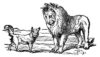
The lion makes himself king of the beasts but seeks to be known as fair and just. So he gives up eating meat and adopts the more modest, vegetarian diet of his subjects. He can’t keep it up, however. Ashamed, he invents a stratagem to justify the violence required to kill his victims. He takes them aside and asks them if his breath smells, whatever they answer, he kills and eats them (if he’s hungry). A monkey gives particularly beautiful reply which makes him feel guilty about what he’s about to do. He gets over this by pretending to be sick and when the physicians advise him to stick to a light diet, he claims monkey meat is suitable, being nice and lean, and has it killed immediately.
Two things struck me about this.
Answering the Lion’s question is a matter of etiquette. You’d expect people to use the utmost discretion with the king. You imagine they will change that calculation once it becomes known that politeness can be fatal. But then candour has the same results. This is almost amusing. Ministers or courtiers boxed in. Silver-tongued flattery seems to offer a way out, but proves only a reprieve from the same consequences.
What is the message? ’Power is unanswerable.’ ‘Don’t get too close to a tyrant.’ Something like that, though its applications will be relatively limited these days. The recourse against abusive bosses is more robust. And who really cares about those who cosy up to actual tyrants?
Then, the Lion’s scruples are surprising. If any quality is characteristic of the tyrant it is a lack of shame. And ancient origins of the fable are betrayed by the suggestion death could be considered an proportionate consequence for an answer to such a trivial question. (I mean, it can be read metaphorically, but the guy’s entourage is going to empty out pretty fast.)
So why did it hook me?
Well, I started to think about why the Lion might have felt constrained to give up his meat eating. Where did that come from? Or when did it arise? The decision, it seemed to me, precedes his ascent to the throne. It wasn’t a signal to himself but to others, the rest of the animals, his subjects, or his electorate, as my version has it. He earns the right to his position by appearing fair and just. Only later would the mask be discarded.
Then, in the writing, having started with the campaign, I found I could not reach the period in which the fable takes place, the regime. It began to feel anti-climactic. I was more interested in the deception used to achieve power, the subversion of the democratic process. The more I thought more about the Lion, the more I heard him assert his entitlement, as rightful bearer of the Crown, as presumed king of beasts. His disdain for democracy came through. Would he even take part?
Thus the fable became a confrontation between raw monarchism and nascent democracy.
The two things I retained from my time studying to teach English as foreign language are the now-debunked ‘learner styles’ and something called ‘creating the need,’ a strategy recommended for the first part of a lesson plan.
If I recall correctly, to create the need in the language classroom you have to give the learners an exercise in which use of the new form, whether vocabulary or grammatical tense/mood, was required, but before having introduced the new form. The simplest, most perfunctory way of doing this was to ask questions the learner might not be able to answer properly; much better was to put them in a scenario drawn from real life and ask them to communicate. The hope is that the learner will reach for the required language and in so doing discover their need for it.
Narrative writing benefits from a similar strategy, I think.
The writer must excite the reader’s curiosity, prompting questions to which the reader seeks answers. This may seem elementary, but it doesn’t always happen. Many writers take the reader’s interest for granted and busy themselves instead with presenting the most realistic, articulate, or stylish depiction of their subject. But that ain’t enough to sustain a story. Just as a language learner reaches for the required language, the reader or viewer, or listener, must reach for answers; they must want those answers, or ideally, they must need them.
You’ve got to create that need.
I was reminded of this operation by the contrast of two recent cinematic love stories: Clio Bernard’s ‘Ali & Ava’ and Harry Wootliff’s ‘Only You’. In ‘Ali & Ava’ we gain a tangible sense of the loneliness of the two people who will become lovers. This created an irresistible need for that to happen. In Harry Wootliff’s film, the lovers find each other almost immediately and it is only a mutual decision to have a baby together that puts the relationship under strain. The match is made and the story assumes we will care about whether they remain together by virtue of that fact. Despite the psychologically astute script, charismatic performances, and superb handheld photography, the film neglects to make us reach for answers—it already seems to know them.
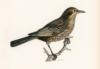
Late last year, I wrote a wholesome, inspirational fable. I was reluctant to promote it though, because the postivity placed it outside my comfort zone. As an original, there was no antecedent to be over-written or challenged. No reference. Nor was there any inherent aggression, no punishment or cruelty. It was whimsical. It was hard for me to assess the work. I liked it, but I couldn’t decide if it was any good or not.
If you want to read it before I discuss what I think it means, you can find it here:
The story was inspired by an illustration of a bird wearing artificial wings. I don’t remember where I saw the image—I didn’t make a note (!)—but the idea, the curious superfluity of it, provoked my imagination: what was going on there? what kind of madness was this? As I wrote, I realised it may not be madness but rather desperation. The bird needed the extra pair, perhaps like an injured person needs crutches.
In both cases, there is subterfuge and transformation. The difference here is the protagonist does not provoke resentment or suffer punishment for transgression. She triumphs over her obstacles. Like Jackdaw’s fabulous stolen plumage, her fake wings are effective. They work. They serve to get her—literally—off the ground, after which she proves able to continue on her own.
What does it mean?
What does it mean? For me, there are two elements. One considers the role of confidence. The fledgeling wants to become something, let’s call it an adult. She believes she is ready and she is almost right. When she fails, her confidence takes a hit and worse, she has put herself in great danger. But she survives and rebuilds that confidence through the construction of artificial wings. In order to prove she is strong enough to fly, she resorts to something that is not her, and it works.
The fable speaks to the value of taking action, specifically of using an aid, a therapy, a fiction (an uplifting fable perhaps): whatever keeps you moving forward. ‘Don’t be afraid to seek help,’ it argues. ‘Don’t be ashamed.’
It also commends tenacity, risk-taking, and aspiration. And rewards them with a happy ending. This may be where I get uncomfortable. I don’t believe things will work out and regard stories in which they do as somehow fake, contrived, fabricated, like a pair of artificial wings.
Now you’ve read it, what do you think?
this wasn’t the image, but it’s the only one I’ve been able to find and I thought it would be nice to promote the artist, Sheila Norgate (website)
Last week I began to poke around in the distant corners of the land of fables, the hinterland. I went to the bottom of the Perry list* and started to work my way up. I can report most of these fables were unfamiliar and forgettable, as you might expect, but at number 559 (out of 584) I paused.
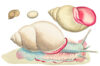
A snail found a mirror and when she saw how brightly he shone, she fell in love with him. She quickly climbed up onto the mirror’s round surface and began to lick him. The snail clearly was no good for the mirror and only besmirched his lustrous radiance with filth and slime. A monkey then found the mirror after it had been dirtied by the snail, and remarked, ‘That’s what happens when you let someone like that walk all over you!’ <translation by Laura Gibbs, here>
Curious and Incomplete
A snail and a mirror are a curious pair in a curious scenario which leaves several questions unanswered. Is the mirror on the wall? or on the floor? How did it end up there? Where does it belong? It’s also a scenario that feels incomplete dramatically. This is common in fables: the brief events provides an opportunity for another character to comment, rather than take the drama further. But it’s that possibility of development which provokes the imagination.
Much more than that, the Monkey’s comment needed to be addressed. It struck me as harsh. Misplaced. And unfairly dismissive of the snail. The snail’s affection seems to me quite innocent. Lovely, even. By other eyes, its silvery trails could be viewed as expressive or decorative. What then? (Swap slugs for snails and it’s a different matter.)
And doesn’t the mirror have a view on the matter? A mirror’s nature may be passive ipso facto, but if it can be rebuked for the company it keeps, it should be permitted a voice too, no? You’d think?
My version gives her that voice. I suppose you might call it a feminist version. If anything ought to be repudiated here it is the superficiality of objectification, of propriety and prettiness, but above all, for me, the scenario provides an affirmation of intimacy and the essential messiness and mystery of attraction.
*American academic Ben Edwin Perry compiled a comprehensive list of fables attributed to Aesop, placing those from Greek sources first, then Latin, chronologically.
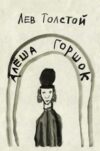
I came across this accidental masterpiece in ‘Lives and Deaths,’ a collection of Tolstoy’s shorter works translated by Boris Drayluk. It surprised me, hidden away at the end like an afterthought, its simplicity and brevity (only nine half-pages) proving more potent than the longer texts preceding it.
The story is an unpretentious, plain-spoken account of a young peasant’s life and death which, though quite unremarkable, has the texture and feel of something spiritual, or saintly, a mundane hagiography.
No drama
It’s an uneventful life, comprised almost entirely of work and abuse, and more work, the kind of exploitation authorised by a system which grants extensive power to the male head of the family (patria potestas). Yet the lad seems content with his position. He doesn’t complain. The synopsis provided with the text on wikisources picks out the main action:
“A young servant falls in love with the household cook, but they are forbidden to marry.”
From this, you might expect drama, either tragic or comic. But drama progresses through conflict and when faced with his father’s opposition to the match, Alyosha acquiesces without hesitation. Tears are shed quietly, in Alyosha’s case belatedly, and life goes on. Well, not for very long because, shortly after the cancelled engagement, the lad suffers a serious accident which leads to paralysis and death.
Tolstoy abandoned the work, dissatisfied. I suspect because he could not wring from it the meaning the radical christian anarchist intended and that the story eluded his sermonizing tendencies is probably a good thing. Nevertheless it retains both a deeply affecting piety and a disturbing, provocative passivity, disturbing at least for the modern reader.
Innocence and Obedience
Alyosha is an innocent; pure, you might say, being free of corrupting influences, and profoundly lacking in agency. He is bullied (for his big ears), but shrugs it off. He works and he obeys, accepting reprimands without protest. He embodies the truism that they key to happiness is being content with what you have. He seems not to want things.
As a result, we (the modern reader) want things on his behalf. We note his pleasure, his surprise at his pleasure, when he buys himself a red knitted jacket. And we are delighted when something more significant comes his way, when he learns “of a special sort of relationship between people, a relationship not based on material need” and he realizes the young cook cares for him. For him. For his own sake.
“But here was Ustinia, a perfect stranger, who felt sorry for him. Here she was, saving him porridge with butter in a pot and watching him eat, her chin propped on her bare arm. And if he looked up at her she’d laugh, and he’d laugh too.”
This must be one of the most tender revelations in literature. Not merely the budding of young love, gauche and naive, but the opening of a space for the self where before there was none, a flower about to bloom in a neglected corner of a harsh world. And then his master’s wife objects, his father blocks the marriage, and the lad closes the door without protest.
“Got to do as we’re told. No choice.”
There are two things to say about that. First, he is right. That is to say, he understands correctly there is no viable future for them without his father’s or his master’s permission. They will be cast out; they will lose their positions, be pulled apart. On the other hand: come on, boy, live your life. Put up a fight.
Alyosha seems on the cusp of selfhood. It tantalises us, seeing it briefly within grasp. (We assume success means fulfilment, though it would in fact bring more conflict.) But he prefers to accept things as they come, whether good or bad. And this is how he receives his death, with a beatific equanimity. His contentment muting our sense of loss.
~~~
It is curious I should alight on this story so soon after writing about the spirit of Pinocchio. The two characters could not be more different. Indeed, I would call them opposites: Pinocchio full of wilfulness, defiant and anarchic; Alyosha obedient and hard-working, and entirely lacking in will. Neither strike me as a good example for living, but as protagonists, as innocents embodying a way of being, a principle, they are equally fascinating.
I can see both of them as boys in the park, though not at the same time.
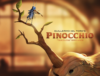
In this new animated adaptation, Guillermo Del Toro takes the much-loved episodic tale for children and fashions a more coherent narrative with a deeper emotional anchor. He makes the story his own, bringing to the fore his perennial themes of death and loss, the Underworld, and the shadow of fascism. The film is a triumph: an exquisitely realised labour of love, with exceptional design, lighting, and mise en scene.
And yet it didn’t work for me. I didn’t go along with it. I would like to reflect on why that might have happened.
What Went Right Is What Went Wrong
It could be the old problem of holding onto the original, getting abstracted by points of divergence. But these divergences were not trivial. Del Toro and screenwriters Patrick McHale and Matthew Robbins, alter the beginning of the story, adding a lengthy flashback, and then commit to that new trajectory, picking up existing episodes and characters accordingly, supplying new ones when required.
I have to applaud their work—the use of Pinocchio’s famous growing nose, for example, was ingenious and the talking cricket’s character arc provided an elegant solution to the matter of transformation. In a literary sense, they have improved on the original, which I’d describe as clunky and uneven. But in the process I think they lost the spirit, the innocent primal exuberance that animated Collodi’s orginal text.
The ‘Spirit’ of the Original
Pinocchio is a force of nature, a life force. His spirit literally animates a block of wood. The block protests at the threat of being chopped up for the fire which so spooks its owner he passes it on to his neighbour, a poor woodcarver who needs material for has begged material for his next project. The presence of this life force is arbitrary, unmotivated, unexplained. When the woodcarver works on the block of wood, articulating the limbs, carving its visage, he gives the spirit the ability to act in the world, but the first thing it does is laugh in the old man’s face and steal his hairpiece.
The story that follows concerns the process of learning to control and direct this energy, to find a place in the culture, or the community. Some argue that it is an allegory of an individual’s journey to maturity; it is certainly a push and pull of duty and desire, which culminates like so many stories in an act of selflessness. Del Toro’s narrative has a similarly strategic climax, but a different message.
But the fun of the character is to be found not in the lesson or message but the trouble he causes and the scrapes he gets into: to put it simply, the original is more fun, more anarchic, while Del Toro’s emphasis on the death shifts the centre of gravity from the spirit of the boy to the woodcarver’s sense of grief and loss and an adopted child’s wish to be fully-accepted.
Perhaps it all went wrong when the puppet/boy began to sing his predecessor’s mother’s song. Besides being more musical theatre pastiche than folk lullaby, the song was out of character, or presented a very different, sweeter character than the one I expected. The film lost me there and never really won me back.




 ‘
‘ But the set-up proves the least effective part of the film. It feels staged, the child actors self-conscious, performing to camera. I was bracing myself for disappointment, but once we reach Coney Island, the film burst into life, spontaneous and incidental. We watch the boy roam the amusement park and beach in a series of short scenes and passing encounters captured by a concealed camera strapped to the the director/cameraman’s body.
 The boy fails this challenge, but seeks to prove himself elsewhere, aspiring to the baseball skills of his elder brother and friends. He visits the tin can alley, repeatedly, and later struggles manfully to lift the bat against an automated pitching machine. He eats, randomly and with relish, hot dogs and watermelon and coke and ice-cream, though he rolls his candy floss into a ball to practice his aim. In between, he is left to wander among the crowd, bored and lonely.
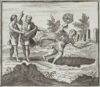
 ‘The Astrologer who Fell into a Well’ is a mean-spirited anecdote that demonstrates a common sense truth: you need to look where you are going, otherwise you may trip and fall. It goes like this:
 I first began to consider something original, inspired by that seductive image of neglect, both beautiful and disturbing, a man re-wilding himself, but I couldn’t (yet) settle on a narrative that would make this work. In the meantime, I decided to return to Aesop’s fable, introducing a dreamer into the action. They would replace the redundant observer character, or rather the astrologer, while also giving the astrologer the observer role, if you see what I mean. The dreamer consults the astrologer to discover what the future holds. After the astrologer predicts great things, they leave his premises head brimming with visions of a bright future, and they neglect to look where they are going. Down the hole they go! As I worked my way into the situation I realised the shock of the fall would make this person angry and they would likely blame someone else, the astrologer for example, pointing to his failure to predict the accident.









 The story that follows concerns the process of learning to control and direct this energy, to find a place in the culture, or the community. Some argue that it is an allegory of an individual’s journey to maturity; it is certainly a push and pull of duty and desire, which culminates like so many stories in an act of selflessness. Del Toro’s narrative has a similarly strategic climax, but a different message.